Friday, March 7, 2008

Let's Stop Iran!


BRUSSELS (AFP) — US Secretary of State Condoleezza Rice insisted Thursday that world powers would continue to offer Iran incentives to get it to suspend uranium enrichment, even after Iran rejected further talks.

"The six ... continue to follow a dual track strategy," she told reporters at NATO headquarters, referring to the pursuit of sanctions at the United Nations and the offer of talks led by EU foreign policy chief Javier Solana.


"We are continuing to talk about what the path would look like for Iran, should it choose the path of negotiation," Rice said...


On Wednesday, Iranian President Mahmoud Ahmadinejad rejected any new talks with Solana, saying Tehran would in the future negotiate only with the UN nuclear watchdog, the International Atomic Energy Agency (IAEA).

"Iran will not negotiate with anyone outside the (UN atomic) agency with regard to its nuclear issue," he said, according to state news agency IRNA.

Click here for the full article.


The United Nations and the EU are both trying to persuade Iran to "suspend uranium enrichment." Iran, however, has rejected further talks with the EU and states that in the future, they will only negotiate with the International Atomic Energy Agency, the UN's "nuclear watchdog."
GRADE THIS POST

Thursday, March 6, 2008

Financial sanctions "painful" for Iran-US official

Targeted financial sanctions have been effective in isolating Iran, causing a "painful" situation for Tehran's leaders and raising questions about the Iranian administration, a U.S. Treasury official said on Thursday."Iran has found itself increasingly isolated from the international financial system as banks around the world decide that maintaining their Iranian clientele is not worth the risk of unwittingly facilitating (weapons) proliferation or terrorism," Treasury Under Secretary Stuart Levey said in remarks prepared for delivery to an American Bar Association conference in Miami.

"That self-imposed isolation combined with the Iranian regime's mismanagement of their country's economy is beginning to generate a debate about the wisdom of the current regime's policies," he added.

Recent U.S. financial measures targeting specific financial institutions have been more effective in applying pressure than sanctions aimed at an entire state, Levey said."Rather than grudgingly complying with, or even trying to evade these measures, we have seen many members of the banking industry in particular voluntarily go above and beyond their legal requirements because they do not want to handle illicit business," he said.

Grade this post

Read this post

This post shows that not is there conflict with Iran and the U.S but also the private banks within.

Gay Iranian fights deportation move


A gay teenager who sought sanctuary in Britain when his boyfriend was executed in Iran is battling authorities who want to return him to his home country.Mehdi Kazemi, 19, came to London to study English in 2005 but later discovered that his boyfriend had been arrested by the Iranian police.


Mr Kazemi was told by his father in Tehran that his boyfriend had been questioned about his sexual relationships before his execution in April 2006 and named him under interrogation.
Mr Kazemi claimed asylum in Britain, fearing for his life if he returned to Iran.His case was refused late last year so he fled Britain for the Netherlands where he is now being detained.He appeared before a Dutch court to fight his return to Britain, where he fears authorities will send him back to Iran.


In a letter to the British Government, Mr Kazemi told Home Secretary Jacqui Smith: "I wish to inform the Secretary of State that I did not come to the UK to claim asylum. I came here to study and return to my country."But in the past few months my situation back home has changed. The Iranian authorities have found out that I am a homosexual and they are looking for me. If I return to Iran I will be arrested and executed like my former boyfriend."


Peter Tatchell, of the gay rights campaign group Outrage, who described the Government stance as "shameful" said a Dutch appeal court was expected to decide soon whether to grant him permission to apply for asylum in Holland or send him back to Britain.
A Home Office spokeswoman said it did not comment on individual cases, but if an application is refused there is a right of appeal to an independent judge.


Grade this post


This post shows that there are no rights for gays in Iran. Also there is curruption in their police force. This shows there is not a very legitimate police force.


Sanctions Will Not Hinder Iranian Oil Production


TEHRAN, March 6 (Reuters) - Iran's oil minister said on Thursday the latest U.N. sanctions on Tehran over its disputed nuclear plans would not affect the oil sector in the world's fourth-largest crude producer.

Gholamhossein Nozari was also quoted as describing this week's OPEC meeting in Vienna as positive and said the impact of the cartel's decision to keep production unchanged would be seen in coming weeks.

OPEC ministers agreed to hold output steady and said oil prices which hit an all-time high on Wednesday were driven by factors beyond their control. U.S. crude surged to a record $104.95 a barrel in late Wednesday trade...

But he said: "The impact of OPEC's decision on oil prices will become clear in future weeks and one should see how the price growth develops in future weeks."

Read more.


Eariler this week, Iran wanted to cut back oil production. However, according to this article, OPEC ministers have agreed to keep output at the current amount. Though the U.S. continues to place sanctions on Iran, this Middle Eastern country plans to reign as the "world's fourth-largest crude producer."
GRADE THIS POST

U.S. v. Iran: Running Out the Clock


Nobody on any side of the Iran nuclear dispute believes that yesterday's U.N. sanctions vote is going to break the deadlock. Faced with continuing Iranian defiance of the demand that it suspend uranium enrichment until concerns over the intent of its nuclear program can be resolved, the Security Council passed a package that incrementally tightens existing sanctions. It banned travel by certain officials of Iran's nuclear program, freezed the assets of certain companies and barred Iran from importing certain dual-use technologies. But Iran has made quite clear that it has no intention of complying with the U.N.'s demand, which it deems "illegal," and it is more than capable of absorbing the very limited pain inflicted by the new measures. Indeed, the package agreed upon on Monday reflected the lowest-common-denominator consensus between countries such as the U.S., Britain and France, which wanted tougher sanctions, and countries such as Russia and China that want to avoid measures with real bite, both because of their own commercial ties with Iran and because they believe putting Iran's back against the wall will simply exacerbate the conflict.


So, despite being the subject of a new sanctions package adopted by the overwhelming consensus at the Security Council (Indonesia's abstention was the only discordant note), Iran is not feeling particularly isolated or pressured. The Council vote came on the same day that President Mahmoud Ahmadinejad concluded his historic state visit to Baghdad, where he was feted and hailed as a friend by a government entirely dependent on the U.S. for its security. Nor is Iraq alone among Arab states in ignoring Washington's calls for Iran's isolation. Ahmadinejad was the personal guest of the Saudi king during the recent Hajj pilgrimage, and even Egypt is responding to Iranian diplomatic initiatives aimed at ending almost four decades of hostility with the Islamic Republic. It's not that Iraq, Saudi Arabia and Egypt are simply ignoring the sources of tension with Tehran: instead theirs is a regional realpolitik that sees a cooperative relationship as a more productive way of addressing those issues than the more confrontational stance of the U.S.


Similarly, on the nuclear issue, Britain's ambassador to the U.N., John Sawers, told reporters that the Security Council would hold firm in the demand for Iran to suspend enrichment, but would pursue that goal through ongoing negotiations even as the limited sanctions are put into effect. Last year's U.S. National Intelligence Estimate, which concluded that Iran does not currently have a nuclear weapons development program has, in effect, removed the sense of looming crisis that had once driven the issue, and rendered the option of a U.S. military strike to destroy Iranian facilities highly improbable. (It is acknowledged, however, that Iran's current nuclear activities would put such capability within easy reach if the leadership in Tehran should opt to pursue such weapons.)

This article shows the continuing standoff between the U.S. and Iran over uranium enrichment. The U.S. continues to believe that they have evidence Iran is planning to build nuclear weapons and Iran continues to deny that claim by accepting any sanctions by the U.N.

GRADE THIS POST
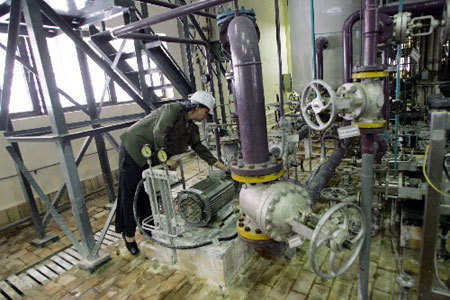
Iran may still be seeking nuclear bomb: British diplomat


Iran may not have ended efforts to develop a nuclear weapon, despite a US intelligence report that Tehran shelved its atomic arms plans in 2003, a senior British diplomat was quoted as saying Thursday.The diplomat, cited by British newspapers, questioned the US National Intelligence Estimate, which caused surprise last year by saying that Iran's atomic goals had been exaggerated.

"Many of us were surprised by how emphatic the writers of it were. That all the activities stopped in 2003 and had not resumed," said the diplomat, speaking on condition of anonymity.
"I haven't seen any intelligence that gives me even medium confidence that these programmes haven't resumed. So we just don't know," he added, cited by the Independent and Guardian dailies.

The US intelligence report released in December said Iran halted its nuclear weapons program in 2003, although it cautioned that the Islamic republic could be able to make a nuclear weapon sometime between 2010 and 2015.The assessment was seen by some as weakening the justification for military strikes against Iran, although US President George W. Bush refused to rule out an attack and vowed to step up pressure on Tehran despite the report.The British diplomat said the US report "had an impact on the international debate, but I don't think it ever took the military option off the table," adding that the Iranians "continue to pursue a dangerous path.


Iran was searched in 2003 and showed no sign of continuing their missile dovelorment program. Britan still dosn't belive Iran and is not quite done searching Iran. This shows that the U.S. isn't the only country trying to keep Iran from makeing missils.


Grade this post

Will OPEC Increase Output?


VIENNA, Austria (AP) — OPEC has all but ruled out pumping more oil to ease record-high prices, key oil ministers signaled Tuesday on the eve of a key meeting...

Kuwait and Libya are among OPEC members who have said the cartel should maintain its current output, estimated at about 31.5 million barrels a day — roughly 40 percent of daily world demand.

However, Iran and Venezuela — both hawkish on prices — have pressed for a cut in output. Analysts said it was doubtful that the rest of OPEC would go along with that, since it would push prices even higher in the short-term...

"Global markets are well supplied," Iranian Oil Minister Gholam Hussein Nozari said Tuesday, saying the weak U.S. dollar was a greater concern.

Full article here.


Kuwait and Libya want OPEC to continue producing crude oil at the current rate, but Iran and Venezuela wish to cut back on oil production. The Iranian oil minister stated that markets around the world were "well supplied." Iran's stronghold on crude oil and their awareness of this advantage could have a huge impact on international oil trade.
GRADE THIS POST


Iran rejects new EU nuclear talks


"Iranian President Mahmoud Ahmadinejad has refused to enter into any new talks with the European Union about Iran's nuclear programme.
Mr Ahmadinejad said from now on Tehran would only discuss the issue with the UN's nuclear agency, the IAEA.
After imposing a new set of sanctions on Iran over its nuclear programme, world powers on Monday called on Iran to hold more talks with the EU's foreign policy chief, Javier Solana.
In a strongly worded statement to the IAEA, the three countries said Iran's response to the agency's questions about its alleged weapons development activities had been "dismissive and unsatisfactory".
Britain's ambassador to the IAEA, Simon Smith, warned: "As long as Iran's choice remains one of non-cooperation, we for our part will remain determined to demonstrate the costs and consequences of that choice." '
This stance taken by Iran shows the country's continuing mistrust towards the U.N. Iran's unwillingness to negotiate will continue to keep its nuclear program ambiguous towards western countries.
GRADE THIS POST

Tuesday, March 4, 2008

Iran's president: No one likes Americans


"BAGHDAD, Iraq (CNN) -- Iranian President Mahmoud Ahmadinejad, heading home after a two-day visit to Iraq, again touted his country's closer relations with Iraq and reiterated his criticism of the United States.
"No one likes them," Ahmadinejad told reporters prior to returning to Iran, referring to the predominantly U.S. makeup of coalition forces in Iraq.
"We believe that the forces which crossed oceans and thousands of kilometers to come to this region should leave this region and hand over the affairs to the peoples and government of this region," Ahmadinejad said.
His visit follows trips to Iran last year by top officials of Iraq's Shiite-led government, which has been fostering a closer relationship with predominantly Shiite Iran since the Saddam Hussein regime was toppled by U.S.-led forces in 2003.
His visit was greeted warmly by Iraq's Shiite Muslim leaders, whose links to Iran predate the overthrow of Hussein."
This visit by Ahmadinejad shows his continuing desire to advertise his country's dislike towards the United States. Spreading this news in Iraq during times of transition of power in the country will make it harder for the United States to leave Iraq.
GRADE THIS POST

Iran and Iraq: United


BAGHDAD -- Iran and Iraq are two united neighbors and “no event can break the brotherly ties” between them, President Mahmud Ahmadinejad said on Monday in a meeting with Iraqi Foreign Minister Hoshyar Zebari.

Over the past 50 years there have been many attempts for harming the brotherly relations between the two countries, but they were unsuccessful, Ahmadinejad stated.

“We should use our maximum potential for improving ties and helping one another,” he said.

The Iranian president started a landmark two-day visit to Iraq on Sunday.

In their meeting, Ahmadinejad and Zebari discussed demarcation of borders, the issue of Iranian pilgrims visting holy sites in Iraq, and the Iran-U.S. talks on security condition in Iraq.

Iraq and Iran want to strengthen their ties and "help one another". This is bad news for the United States, who is currently at war with Iraq. The U.S. and Iran have already experienced a period of increased conflict. Will the bond between Iraq and Iran cause a fresh outbreak of tension?
GRADE THIS POST

Sunday, March 2, 2008

Thursday, February 28, 2008

U.S. To Increase Pressure on Iran


WASHINGTON (Reuters) - The U.S. Treasury's top sanctions official is traveling to major Middle East financial centers this week to build support for its campaign to increase international pressure on Iran and combat terrorist financing.

A Treasury spokesman said Stuart Levey, undersecretary for terrorism and financial intelligence, will visit Qatar, Bahrain and the United Arab Emirates this week to talk to government officials and banking executives.

"That trip is part of our overall mission to combat terrorist financing," said Treasury spokesman John Rankin.

The Treasury has frozen U.S. assets and prohibited American transactions with several Iranian state banks and other companies it accuses of aiding Iran's quest for nuclear weapons and of providing financial support to terrorist groups. Among banks blacklisted are Bank Melli, Iran's largest bank, Bank Mellat, Bank Sepah and Bank Saderat.

Read more.
The conflict between the US and Iran strengthens. The United States wants to increase pressure on Iran and "combat terrorist financing." What will become of the two battling countries?
GRADE THIS POST

Wednesday, February 27, 2008

Israeli official calls Iran 'dangerous ticking bomb'


Israel’s ambassador to the United States said today that Iran was becoming a “very, very dangerous ticking bomb” and urged the world to take a more active role in forcing Iran to give up its uranium-enrichment program.A National Intelligence Estimate issued by U.S. agencies in December concluded that Iran suspended its nuclear arms program in 2003, but the Bush administration has stressed that the report confirms that Iran had a program and continued desire to build nuclear weapons.

Sallai Meridor, Israel’s ambassador to the U.S., echoed the Bush administration call that Iran remains a serious threat, but he also upped the ante in making a comparison to the international community’s slowness to head off Adolph Hitler in the 1930s.

“The writing is on the wall like in the ‘30s,” Meridor told defense reporters in Washington. “It’s not hidden, it’s stated. Everybody who doesn’t close his eyes can see it. Everybody that is not deaf can hear it. The world should act and act now and not repeat the terrible mistakes that it made in the past.”It’s important to note that Iranian President Mahmoud Ahmadinejad has called Israel a rotten state, has declared that the nation needs to be obliterated, and has expressed doubt about the Holocaust.

As you may tell Israel and Iran are going through tough times now but Israel is taking it to the next level. They believe Iran should be wiped off the face of the face of earth. Israel is comparing Iran to Hitler and comparing Iran's actions to the Holocaust.


Grade this post Read full article here

Tuesday, February 26, 2008

False Allegations Concerning Iran's Nuclear Program?


Iran's U.N. ambassador on Monday accused an Iranian opposition group on the U.S. and European Union terror blacklist of fabricating allegations that his country tried to make nuclear weapons in the 1990s.

Ambassador Mohammad Khazee said the United States was getting unreliable intelligence from the Mujahedeen Khalq, also known as the People's Mujahedeen Organization of Iran, which helped Saddam Hussein during the war Iran-Iraq war in the 1980s.

He insisted that Iran has resolved all six outstanding issues about its nuclear program — which the International Atomic Energy Agency confirmed in its report last Friday — and Tehran should not face any new U.N. sanctions. He warned that new sanctions would harm "the credibility" of the U.N. nuclear watchdog.

U.S. Secretary of State Condoleezza Rice disputed the Iranian assessment, saying the IAEA report provides "very strong" grounds for the Security Council to move ahead quickly with new sanctions. She cited the government's refusal to suspend enrichment — as the council has demanded — and its failure to respond credibly to U.S. allegations that Iran conducted weapons research into high explosives and missile design in the 1990s.
Read more.
While Iran believes that U.S. accusations concerning the nuclear program are senseless and were initiated by unreliable resources, the U.S. states that they have "very strong" reasons to follow their instincts and impose new sanctions on Iran.
GRADE THIS POST

U.S. predicts quick vote on Iran sanctions


"WASHINGTON (CNN) -- The United States predicted a quick vote on a third resolution imposing sanctions on Iran over its nuclear program as it begins to build a case against Iran's central bank for proliferation activities, senior State Department officials and European diplomats said.

Diplomats from Germany and the permanent members of the U.N. Security Council -- the United States, Britain, France, Russia and China -- met Monday at the State Department to discuss the latest draft, as well as other steps that could be taken to get Iran to cooperate.

The U.N. Security Council imposed two rounds of sanctions on Iran -- in March 2007 and December 2006 -- after Iran failed to comply with a U.N. deadline to suspend uranium enrichment and resume negotiations. Iran says its nuclear program is aimed solely at the peaceful production of nuclear energy.

The members agreed earlier in February on a draft resolution and were hoping it would pass by unanimous vote, but some countries on the council, including Libya, South Africa and Indonesia, have voiced concerns about the text.

Iran says its nuclear program is necessary to provide civilian energy for the country, but other countries have voiced concern that its true purpose is to produce nuclear weapons. The United States, which does not have diplomatic relations with Iran, has been the most vocal of those countries."

This article shows the continuing struggle between the U.N. and Iran's nuclear program. Because the U.N. is not decisive when coming to a consensus about sanctions against Iran, it will take them some time to before they can put a substantial amount of pressure on Iran.

click here for full story

GRADE THIS POST

Khamenei Praises Iran's Nuclear Program


Iran's Supreme Leader Ayatollah Ali Khamenei has hailed Iran's "great victory" over its nuclear programme.

Mr Khamenei praised President Mahmoud Ahmadinejad's handling of the issue.

Last week, the UN nuclear watchdog said Iran was being more transparent, but had not given "credible assurances" that it was not building a bomb.

On Monday, the agency heard that Iran may have continued secret work on nuclear weapons after 2003, the date US intelligence suggested the work ceased.

"One example of an advance by the Islamic system has been the nuclear issue, in which the Iranian nation has honestly and seriously achieved a great victory," Mr Khamenei said on Tuesday.
Click here to read more.
The Grand Ayatollah feels that the nuclear program is a path to progress for Iran. Though they are under UN surveillance, the program has brought on praise from Khamenei.
GRADE THIS POST

Sunday, February 24, 2008

Thursday, February 21, 2008

The Iranian body that vets election candidates has reinstated another 251 people who had been banned from running in next month's parliamentary vote.


The authorities have already overturned bans on more than 800 candidates.
Correspondents say it is not clear how much impact the reinstatements will have on the chances of opposition parties in the election.

The newly-approved candidates have very little time now to campaign before the election on 14 March. A spokesman for the Guardian Council, Abbasali Kadkhodaei, said those reinstated were from different political camps, including reformist candidates who had criticised the council for failing to ensure a competitive race.

The council also oversees all legislation in Iran. Candidates are vetted to check loyalty to Iran's Islamic revolutionary system. This process will continue for several weeks and the final list of approved candidates will be announced on 5 March. Reformists were defeated in 2004 after hundreds of such disqualifications.

Read full article here

This shows there is a great desire for the people of Iran to make a chang ein their country. Eventhough alot of people were denied the right to run they still have the drive and want to represent their country.

Grade this post

New Iran sanctions to be presented to Security Council


European powers will formally present to the Security Council Thursday an amended UN draft resolution seeking new sanctions against Iran, said French ambassador Jean-Maurice Ripert.
"We will formally introduce this afternoon the draft resolution in the Security Council in the name of its three co-sponsors, France, Britain and Germany," Ripert told reporters.
"The goal is to begin formal negotiations" in order to get the council to adopt the resolution "as soon as possible, ideally next week," he said.

READ FULL ARTICLE HERE

As we can see the US isn't the only country concerned with keeping Irans power under control. The French seem to be very worried about Irans Nuclear Program.


GRADE THIS POST

First phase of Iran oil bourse inaugurated on Kish island


The first phase of Iran's oil stock market started its work on Kish island in the Persian Gulf, southern Iran, on Sunday presenting oil and petrochemical products. The stock market was inaugurated in a video conference ceremony from the capital Tehran attended by ministers of oil, finance and economic affairs as well as chairman of Iran's Stock Exchange and a number of other officials and financial experts

Oil Minister Gholam Hossein Nozari said that Iran's Oil Bourse is to open gate of international oil business to Iran in the near future. The specialized bourse for oil derivatives and petrochemical products is regarded as a turning point in oil transactions, he said. Iran's share in international oil trade is very low and such a bourse will help Iran take a leap in this sector in the near future, underlined the minister. It is predicted the event would prepare grounds for active presence of foreign investors in Iranian oil industry and thus raise the country's share in global oil trade, he said.


Full article here

This post is showig how Iran is trying to enter into the world of trade. Iran is trying to make allies and raise there GDP.

GRADE THIS POST

Solomon

I played around and got the flag removed. It was a rather strange process.

Peace Between Iran and India?


DUBAI: India and Iran have agreed to improve bilateral ties, particularly in consular affairs and provision of broader facilities for nationals of both the countries that resulted in signing of a MoU.

The MoU pertains to agreements on easier issuance of visas, providing better facilities for residents and students of each country in the other, as well as establishment of a committee to pursue the implementation of the agreements.

Both countries held their Fourth Shared Consular Meeting in Teheran yesterday, led by director generals of two countries' foreign ministries consular head offices.


The shared consular meetings of the two countries are held alternatively in Tehran and New Delhi.


Click here to read more.

According to this article, India and Iran plan to work to improve bilateral relations. Could this be the beginning of a more peaceful Iran? Or will the country continue to have volatile relationships with other members of the international community?

GRADE THIS POST

Syria, Iran to probe militant's death


"DAMASCUS, Syria (AP) -- Syria and Iran will conduct a joint investigation into the car bombing that killed Imad Mughniyeh, a commander of their Lebanese ally Hezbollah, Iran's state news agency reported Friday.
Mughniyeh, the suspected mastermind of 1980s attacks on the U.S. Embassy and Marine barracks in Lebanon that killed hundreds of Americans, died Tuesday night in the Syrian capital Damascus.
A Lebanese security official said Hezbollah has appointed Mughniyeh's successor but did not make the name public.
In Tehran, Deputy Foreign Minister Ali Reza Sheik Attar said that during Mottaki's visit to Damascus, which began Thursday, Iran and Syria agreed to form a joint investigation team to "look into the root causes and dimensions of the assassination to identify the perpetrators of this dirty crime," the state IRNA news agency reported.
Syria has not said who it believes was behind the blast. On Thursday, Syrian Foreign Minister Walid al-Moallem said he expected the perpetrators to be identified soon."
This joint investigation between Iran and Syria shows Iran's determination to find the "perpetrators" of the assassination. Though Syria will not say who they believe was involved, Iran has made public that it believes that Israel killed the Hezbollah leader.
GRADE THIS POST

Ahmadinejad's Beliefs Up For Argument


Iran's former nuclear negotiator, a cleric, has said that President Mahmoud Ahmadinejad's government is encouraging superstitious practices.

The remarks have intensified the debate over the return of the Shia saviour, the 12th Imam known as the Mehdi.

Since Mr Ahmadinejad came to power he has repeatedly spoken of the need to plan for the Mehdi's imminent return.

Shia believe he went into hiding more than 1,000 years ago but will return to save the world from injustice.

Hassan Rowhani said the 12th Imam himself made it clear that anybody who claimed to have seen him would be a liar.

Read more.
Ahmadinejad's personal beliefs are causing dissention in Iran. This episode in Iran's history strengthens my belief that politics and religion should be two separate entities.
GRADE THIS POST

Wednesday, February 20, 2008

Iran's Racial Comments Toward Israel


Israeli Ambassador to the United Nations Dan Gillerman met with UN Secretary-General Ban Ki-Moon on Wednesday to express "outrage" over recent statements by Iranian officials calling for the destruction of Israel.


In the hour-long conversation, Gillerman said it was "outrageous for a member state to use racist, Nazi-like statements against another member state."


In yet another verbal attack against Israel Wednesday, Iranian President Mahmoud Ahmadinejad called the Jewish state a "filthy bacteria" whose sole purpose was to oppress the other nations of the region.


"The world powers established this filthy bacteria, the Zionist regime, which is lashing out at the nations in the region like a wild beast," the Iranian president told supporters at a rally in southern Iran.


Ahmadinejad's remarks followed similar statements last week by Gen. Muhammad Ali Jafari, commander of the Iranian Revolutionary Guards Corps, who wrote in a letter to Hizbullah head Hassan Nasrallah that he was convinced "that Hizbullah's might is increasing with every passing day, and that in the near future, we will witness the disappearance of this cancerous growth called Israel."

To read more, click here.
Again, Iran is experiencing tension with Israel. Ahmadinejad has been accused of making racial remarks against Israel, which has led to outrage on behalf of the Israeli people.
GRADE THIS POST