Showing posts with label international relations. Show all posts

Thursday, May 1, 2008

Iraq and Iran Discuss Shiite Militia


BAGHDAD (AP) — Iraqi officials say the government has dispatched a delegation to Iran to discuss concerns about the arming and training of Shiite militias in Iraq.

A government official says five Shiite politicians left Wednesday with "evidence, confessions and pictures" indicating that Iran is supplying weapons and training fighters who are locked in a violent standoff with U.S. and Iraqi troops.

The official says the delegation "will seek to clarify ... the interference of Iranian leaders."

Read more.

Iran and Iraq have been discussing the condition of the Shiite militia. According to the article, Iran is arming and training fighters to battle American and Iraqi troops. The future of Iran is still questionable at this point.
GRADE THIS POST



Thursday, April 24, 2008

India and Iran: Friends?


By landing his plane in New Delhi on what was to have been a routine refueling stop, Iran's President Mahmoud Ahmadinejad has provoked a diplomatic contretemps between India and the U.S. that reveals the fragility of their emerging alliance. New Delhi remains deeply wary over being seen to be doing Washington's bidding when it comes to dealing with other countries.

The furor began when New Delhi received a request for Ahmadinejad's plane to make refueling stop on a flight home from Sri Lanka. The Indian government, which has of late been remedying its prolonged neglect of the West Asian region, pounced on the opportunity to host the Iranian President. Turning the six-hour stopover into an official visit, the government hoped, would also smooth the ruffled feathers of its leftist coalition partners, who have accused the government of betraying old friends like Iran and pandering to the U.S. ever since India voted at the International Atomic Energy Agency in 2005 to refer Iran's nuclear program to the U.N. Security Council. Also, with negotiations over a $7 billion Iran-Pakistan-India gas pipeline stalling, India saw the visit as a chance to breathe life back into a project desperately needed by energy-starved India.

But the announcement that Ahmedinejad would be feted in New Delhi didn't pass without comment from Washington. State Department spokesperson Tom Casey, in reply to a question, said: "We would hope that the Indian government... would call on [Ahmadinejad] to meet the requirements that the Security Council and the international community has placed on him in terms of suspending their uranium enrichment activities and complying with the other requirements regarding their nuclear programme." That statement piqued India's Ministry of External Affairs, which responded: "India and Iran are ancient civilizations whose relations span centuries. Both nations are perfectly capable of managing all aspects of their relationship with the appropriate degree of care and attention." In a sharper tone, the statement added: "Neither country needs any guidance on the future conduct of bilateral relations as both countries believe that engagement and dialogue alone lead to peace." Washington quickly moved to defuse the tension, with Assistant Secretary of State for South Asia Richard Boucher saying the issue had been blown out of proportion: "It's up to every country to determine for itself how it's going to organize its bilateral relations."

India and Iran seem to be strengthening diplomatic ties. It is believed that "energy-starved India" is trying to enrich their energy project.
GRADE THIS POST


Wednesday, April 23, 2008

Israel Determined to Stop Iran's Nuclear Development


JERUSALEM - In the clearest indication yet that Israel now believes Iran's nuclear aspirations will be curbed, Prime Minister Ehud Olmert has said that efforts being undertaken by the international community will ensure that Tehran does not acquire nuclear capability.

In a series of interviews on the eve of the Passover holiday, Olmert sounded the same message: Iran will not get the bomb. "I want to tell the citizens of Israel: Iran will not have nuclear capability," he told the daily Ha'aretz newspaper.

"The international community is making an enormous effort - in which we have a part, but which is being led by the international community - so that Iran will not attain non-conventional capability. And I believe, and also know, that the bottom line of these efforts is that Iran will not be nuclear..."

Tehran insists its nuclear program is civilian in nature and is meant to generate power. But Israel believes Iran is bent on developing nuclear weapons. Threats by Iranian President Mahmud Ahmadinejad to "wipe Israel off the map" have further heightened fears in the Jewish state.

Read more.

Relations between Israel and Iran continue to worsen. Iran's nuclear program strikes a sore spot for Israel, and Israel is determined to stifle the growth of the nuclear program.

GRADE THIS POST


Tuesday, April 15, 2008

Security Talks Failing


TEHRAN (FNA)- Iraq's Foreign Minister says efforts to bring together US and Iranian officials to discuss security in Iraq are faltering due to conflicts of timing and schedules.

Iraq is pressing for a fourth meeting that has yet to be scheduled. Hoshyar Zebari said the two sides need to stick to an agreed date.

He further reminded Iraqi officials had managed to get Iran and the US to agree on four dates, but none of them worked because of scheduling reasons...

The US and Iranian ambassadors held the first round of talks in May, a rare meeting between the two countries, which have not had formal relations since early after Iran's 1979 Islamic revolution...

The United States and Iran broke diplomatic relations in April 1980, after Iranian students seized the United States' espionage center at its embassy in the heart of Tehran. The two countries have had tense relations ever since.

Read the full article here.


After losing friendly ties in 1980, the relationship between the United States and Iran has been rather bitter, to say the least. Will the two countries ever make peace with each other?
GRADE THIS POST

Iran Wants to Join SCO


With an illogical analysis, U.S. Assistant Secretary of State for South and Central Asian Affairs Richard Boucher has recently criticized regional cooperation in the framework of the Shanghai Cooperation Organization and particularly Iran’s request for membership in the SCO. Based on a long-term forecast -- those which most often turn out to be wrong -- he has expressed concern over these issues.

Failing to take the entirety of the SCO’s comprehensive goals into account, Boucher underlines its security objective and says that the Shanghai Cooperation Organization is not a Warsaw Pact and if it moves in that direction, the U.S. will take action. Referring to Iran’s request for membership in the SCO, he said that even if the SCO accepts Iran as a new member in order to make the organization more powerful, the consequences of Iran’s membership in the SCO will depend on the nature of cooperation in the organization...

Iran’s interest in joining the SCO is in line with the country’s moderate foreign policy because, along with its efforts to join the SCO bloc, Iran has made several unprecedented and successful moves to strengthen ties with regional organizations in other parts of the globe -- from the Persian Gulf Cooperation Council to Latin American and African organizations.

Iran’s membership in the SCO is meant to promote cooperation rather than to exercise influence over the organization’s alignment and as such it enjoys full international legitimacy and national and global support. The accession of Iran as an observer member and President Mahmud Ahmadinejad’s invitation to the most recent SCO summit in China were strong steps SCO members have taken for Iran’s accession as a full member of the SCO.

Click here to read more.

Iran has requested membership into the SCO (Shanghai Cooperation Organization), which has caused Richard Boucher some concern. The Middle Eastern country's membership "is meant to promote cooperation rather than to exercise influence over the organization's alignment"; in other words, Iran's joining the SCO should not change the layout of the organization. If anything, their membership should facilitate cooperation among the countries within the organization.
GRADE THIS POST

Thursday, April 10, 2008

Iran: Too Important to Ignore


There was a time not too long ago that Iran was viewed as little more than a nuisance. It was a moderately significant player in the Middle East but not powerful or plugged-in enough to be taken seriously as a regional power.


It could only count Syria as an ally, it had very few other solid links with the Arab world, it was still smarting from the cost of the eight-year-long war with Iraq, and was still finding its way in a post-Cold War world. Ten years ago, a relatively passive policy of containment was deemed a sufficient response to Iran: hemming it in through various trade and financial sanctions and a regular U.S. naval deterrent force patrolling the waters of the Gulf.


Today, little happens internationally without an Iran angle. President Hugo Chavez talks oil politics. Hamas wins an openly contested election in Palestine. Hezbollah and Israel come to blows. Oil prices go up. Iraq burns. In every case, Iran is somehow implicated...


It is vital that we understand the enduring, centuries-long relationship between regional geopolitics and strategic Iranian interests and learn to act on it for the sake of regional stability - regardless of what leaders, moderate or extremist, happen to be in charge in Tehran. Iran's policies are as much a product of regional circumstances as they are domestic imperatives.
Read more.

This article discusses Iran's initial role as a "nuisance" and their rise to international infamy. The article serves as a harsh reminder that Iran can no longer be ignored; the United States and other countries must now keep Iran at the forefront.
GRADE THIS POST

Strong Iranian Influence in Iraq


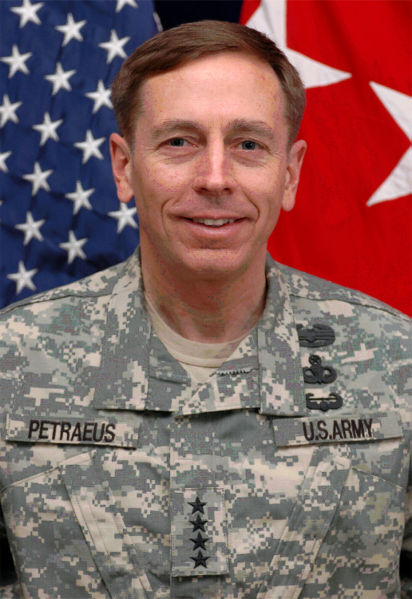
WASHINGTON, April 10 (UPI) -- Testimony by top U.S. officials in Iraq translates the mission there from a fight against al-Qaida to one against the "nefarious activities" of the Iranians. U.S. Army Gen. David Petraeus and the U.S. Ambassador to Iraq Ryan Crocker described the Iranian influence in Iraq as "the greatest long-term threat to the viability" of the Iraqi government, David Ignatius wrote in The Washington Post.

Deterring the Iranian influence in Iraq became the latest justification behind U.S. military strategy in Iraq as al-Qaida numbers dwindle to around 5,000 or so hard-core elements.

The statement by Petraeus that military assessments in Iraq would be ongoing suggests the military strategy by the Bush administration is in a holding pattern as the United States waits out the final days of his presidency, Ignatius said.

The United States is becoming much more tense as the Iranian influence in Iraq continues to grow. US leaders believe that the best course of action is to deter this influence.
GRADE THIS POST

Thursday, March 27, 2008

Iran Moves to Join Shanghai Cooperation Organization


Iran has lodged a bid to join the Shanghai Cooperation Organization (SCO) that comprises Russia, China and the four ex-Soviet Central Asian states, the country's foreign minister said on Monday.
The Islamic Republic, which currently holds an observer status in the regional security group, has long sought to become a full member of the SCO, seen as a counterbalance to U.S. and NATO influence in the region.


"Tajikistan supports us in this issue," Manouchehr Mottaki said after a meeting with the foreign ministers of SCO member Tajikistan and Afghanistan, which is another SCO observer along with India, Pakistan and Mongolia.
The bloc - which primarily addresses security issue but has recently moved to embrace energy projects - has indefinitely postponed accepting new members, but pledged closer cooperation with the observer states.
Both China and Russia have, however, major commercial interests in Iran. The energy-hungry Asian nation wants Iranian oil and gas and to sell weapons and other goods to the Islamic Republic. Moscow also hopes to sell more weapons and nuclear energy technology to Tehran. The Kremlin also needs Iran's endorsement for a multinational arrangement to exploit the Caspian Sea's energy resources.


Iran is still trying to form better ties with many other nations. This could posibaly be because of their growing nuclar program. This move was smart on behalf of the Irannians.


Grade this post


full article here

Iran suspends pilgrim tours to Iraq


Iran has suspended pilgrim tours to Shi'ite Muslim holy sites in Iraq because of rising violence there, state television reported on Thursday.More than 130 people have been killed and hundreds wounded in Iraq since Tuesday, when the U.S.-backed government launched an operation against Shi'ite militias in the southern city of Basra. Fighting has since spread across southern Iraq.

Iranian Foreign Ministry spokesman Mohammad Ali Hosseini protested earlier against what he said was the fingerprinting of Iranian pilgrims entering Iraq by U.S. troops, the official IRNA news agency reported.He said pilgrims went to Iraq under an agreement between the two neighbours and with "appropriate coordination between Iranian and Iraqi officials and (hence) there is no need for another party's interference".The United States has accused Iran of stirring up violence in Iraq by funding, training and supplying weapons to Iraqi militias, a charge Iran dismisses. Tehran blames the presence of U.S. troops for the instability and says they should quit Iraq.

This shows how Iran is taking preventive measures and trying to protect its citizens. This does prevent many Iranians from going on religious journeys though.


Grade this post

read full article here

Egypt Concerned About Iranian Influence


Egypt has become increasingly concerned by Iran's growing influence in the Gaza Strip since Hamas breached the Gazan-Egyptian border in January. In practice, President Hosni Mubarek told a senior European diplomat recently that because of the situation that has developed there Egypt has a common border with Iran.

President Mubarek compared Gaza to Lebanon and said that "in both places the problems and the crises stem from Iran's growing influence."

Israeli Government officials say that Egypt's attitude to the situation in Gaza has significantly altered and Cairo is now relating much more seriously to cross-border arms smuggling by Hamas and Islamic Jihad, especially since Iranian supplied Grad rockets were fired onto the Israeli city of Ashkelon...

Arab Governments are worried by Iran's growing influence but are unwilling, with few exceptions, to become unpopular and openly criticise Teheran when domestic opinion in most of their countries generally supports Iran, local reports add.
Read more.

Iran continues to be in conflict with other countries: this time, they're having problems with Egypt. Iran's strong influence in the Gaza Strip is making Egypt uncomfortable. Will Egypt be drug into conflict with Iran?
GRADE THIS POST

Thursday, March 13, 2008

Iran to build $230 million hydroelectric dam in Nicaragua


A state-owned Iranian company will build the $230 million Bodoke project on the Tuma River in the Jinotega province with financing by Iran's export bank, Energy Minister Emilio Rappaccioli told Nicaragua's Channel 2 on Thursday."The construction will take place once both sides reach an agreement on a series of factors that have to studied further," Rappaccioli said.

The visit came just a week after U.S. Ambassador Paul Trivelli warned the Central American nation about its increasingly close ties with Iran. But Trivelli also said that the relationship would not endanger the United States' "good relations" with Nicaragua.

Under the Iran-Nicaragua pact, Iran will fund a farm equipment assembly plant, 4,000 tractors, four hydroelectric plants, five milk-processing plants, a health clinic, 10,000 houses and two piers in the western port of Corinto. In exchange Nicaragua will export coffee, meat and bananas to Iran.
The planned dam is part of Nicaragua's plan to shift toward renewable energy sources. Currently 80 percent of the country's energy needs are met by oil imports.


The Iranians are now trying to help out the South Americans. This seems strange because the Iranians seem to be "buddying up " with county's closer to the U.S.A. This article also explains that this project is one of many projects talked about by the Iranian government.

grade this post


read full article here

Golamreza Ansari, Iran's Ambassador to Russia: "We don't have such missiles"


The Ambassador Extraordinary and Plenipo­ten­tiary of the Islamic Republic of Iran to Russia Golamreza Ansari told our correspondent about the Iranian nuclear program, missile technologies, Russian-Iranian military cooperation, and the current political situation in Iran. Before his appointment to Moscow, Ansari worked in the Head office of the Foreign Ministry in Tehran and then as Iranian Ambassador in London.

What is your opinion concerning the worries of some countries about the nuclear program of Iran?
Presently the most important global problem in the world is the nuclear program of Iran. Many scientists and politicians in the world worry about this program. There are three aspects of this problem: technical, political, and international law. Only the International Atomic Energy Agency (IAEA) can make any conclusions about this problem. Article 4 of The Non-Proliferation Treaty speaks about the balance of security issues and social-economic circumstances in developing countries.
According to this agreement each country that has signed the Treaty has the right to carry out studies, produce, and use nuclear energy for peaceful purposes. No country has the right to force another country to refrain from using nuclear energy. For more than 50 years, since the founding of the IAEA in 1957, as a result of political pressure this organization has not been able to reflect the interests of developing countries, as outlined in the IAEA Charter.


What is your attitude about the current situation in Iraq?

The Islamic Republic of Iran respects the territorial integrity of Iraq, advocates for unity and solidarity of all Iraqi people, parties, and influential clans. The development and prosperity of Iraq, the strengthening of central authority, clear and exact plans and a date of withdrawal for foreign troops from Iraq - are the main principles of our policy concerning Iraq.

The Iranian ambassador to Russia answered questions that many people were curious about. The Russians were also concerned about the nuclear program . If you look back over the last year though the Russians have been shipping the Iranians uranium.

Grade this post read full article here

Zimbabwe Receives Aid From Iran


The Islamic Republic of Iran will continue to assist Zimbabwean educational and cultural institutions for the development and promotion of education and culture between the two countries, a senior Iranian Embassy official said on Tuesday.


Speaking at the presentation of a book donation worth more than $35 billion to the University of Zimbabwe Library yesterday, the Head of the Cultural Section at the Iranian embassy Mr Mohammed Hassan Ipakchi said he hoped the books would benefit the people.


"Our country is ready to co-operate with various educational and cultural institutions in Zimbabwe. "The books we are donating are from a list we received from the University of Zimbabwe and we hope they are going to benefit the people of Zimbabwe as a whole," said Mr Ipakchi. The acting Pro Vice Chancellor of the University of Zimbabwe, Dr Witmore Mujaji thanked the Embassy of the Islamic Republic of Iran for its long-standing support to the University.

Read more.

This article shows Iran in a gentler, more benevolent light. Though Iran has been having several problems with the United States and Israel, they have been active in assisting Zimbabwe with cultural and educational expansion.
GRADE THIS POST


Wednesday, March 12, 2008

Resignation of US Admiral Does Not Signal Policy Change in Iran


The resignation of the commander of US forces in Iraq and Afghanistan does not signal a policy change on Iran, US Defence Secretary Robert Gates says.

Admiral William Fallon said on Tuesday he was stepping down because of public perceptions of a rift with Mr Bush.

A recent article said Adm Fallon opposed military strikes against Iran...

The affair centres on an article in the April edition of Esquire magazine which described the admiral as "the strongest man standing between the Bush administration and a war with Iran"...

He said the idea, suggested in the article, that Adm Fallon's departure would indicate that the US was planning to go to war with Iran was "ridiculous".

Click here to read the full article.

The fact that the strongest force against a war with Iran has resigned is frightening. What does William Fallon's resignation mean for the future of U.S. and Iranian relations?
GRADE THIS POST

Friday, March 7, 2008

Let's Stop Iran!


BRUSSELS (AFP) — US Secretary of State Condoleezza Rice insisted Thursday that world powers would continue to offer Iran incentives to get it to suspend uranium enrichment, even after Iran rejected further talks.

"The six ... continue to follow a dual track strategy," she told reporters at NATO headquarters, referring to the pursuit of sanctions at the United Nations and the offer of talks led by EU foreign policy chief Javier Solana.


"We are continuing to talk about what the path would look like for Iran, should it choose the path of negotiation," Rice said...


On Wednesday, Iranian President Mahmoud Ahmadinejad rejected any new talks with Solana, saying Tehran would in the future negotiate only with the UN nuclear watchdog, the International Atomic Energy Agency (IAEA).

"Iran will not negotiate with anyone outside the (UN atomic) agency with regard to its nuclear issue," he said, according to state news agency IRNA.

Click here for the full article.


The United Nations and the EU are both trying to persuade Iran to "suspend uranium enrichment." Iran, however, has rejected further talks with the EU and states that in the future, they will only negotiate with the International Atomic Energy Agency, the UN's "nuclear watchdog."
GRADE THIS POST

Tuesday, March 4, 2008

Iran and Iraq: United


BAGHDAD -- Iran and Iraq are two united neighbors and “no event can break the brotherly ties” between them, President Mahmud Ahmadinejad said on Monday in a meeting with Iraqi Foreign Minister Hoshyar Zebari.

Over the past 50 years there have been many attempts for harming the brotherly relations between the two countries, but they were unsuccessful, Ahmadinejad stated.

“We should use our maximum potential for improving ties and helping one another,” he said.

The Iranian president started a landmark two-day visit to Iraq on Sunday.

In their meeting, Ahmadinejad and Zebari discussed demarcation of borders, the issue of Iranian pilgrims visting holy sites in Iraq, and the Iran-U.S. talks on security condition in Iraq.

Iraq and Iran want to strengthen their ties and "help one another". This is bad news for the United States, who is currently at war with Iraq. The U.S. and Iran have already experienced a period of increased conflict. Will the bond between Iraq and Iran cause a fresh outbreak of tension?
GRADE THIS POST

Wednesday, February 27, 2008

Israeli official calls Iran 'dangerous ticking bomb'


Israel’s ambassador to the United States said today that Iran was becoming a “very, very dangerous ticking bomb” and urged the world to take a more active role in forcing Iran to give up its uranium-enrichment program.A National Intelligence Estimate issued by U.S. agencies in December concluded that Iran suspended its nuclear arms program in 2003, but the Bush administration has stressed that the report confirms that Iran had a program and continued desire to build nuclear weapons.

Sallai Meridor, Israel’s ambassador to the U.S., echoed the Bush administration call that Iran remains a serious threat, but he also upped the ante in making a comparison to the international community’s slowness to head off Adolph Hitler in the 1930s.

“The writing is on the wall like in the ‘30s,” Meridor told defense reporters in Washington. “It’s not hidden, it’s stated. Everybody who doesn’t close his eyes can see it. Everybody that is not deaf can hear it. The world should act and act now and not repeat the terrible mistakes that it made in the past.”It’s important to note that Iranian President Mahmoud Ahmadinejad has called Israel a rotten state, has declared that the nation needs to be obliterated, and has expressed doubt about the Holocaust.

As you may tell Israel and Iran are going through tough times now but Israel is taking it to the next level. They believe Iran should be wiped off the face of the face of earth. Israel is comparing Iran to Hitler and comparing Iran's actions to the Holocaust.


Grade this post Read full article here

Thursday, February 14, 2008

Ahmadinejad plans visit to Iraq


Mahmoud Ahmadinejad is due in Baghdad next month for the first visit by an Iranian president to Iraq, government officials in Iraq have said. Mr Ahmadinejad is expected to meet Iraq's President Jalal Talabani and PM Nouri Maliki during his two-day visit, which is scheduled to begin on 2 March.


Iraq and Iran were arch-enemies during the rule of Saddam Hussein, but ties have improved since he was overthrown and a Shia-led government came to power. President Talabani and Prime Minister Maliki both visited Tehran last year. The BBC's John Leyne in Tehran says Mr Ahmadinejad's visit, if it goes ahead, will set the seal on reconciliation between Iran the two countries.


These two countrys that have been feuding for many years are now trying to make friendship. Iran and Iraq both have a common tie of the dislike of americans so this could contribute to the bonding of theses nations.


GRADE THIS POST


Burning issue: Should US air strikes be used to stop Iran's nuclear programme?


NO

There are compelling reasons against a preventive air attack on Iranian nuclear facilities.First, in the absence of an imminent threat (and the Iranians are at least several years away from having a nuclear arsenal), the attack would be a unilateral act of war. If undertaken without a formal congressional declaration of war, an attack would be unconstitutional and merit the impeachment of the president. Similarly, if undertaken without the sanction of the United Nations Security Council, either alone by the United States or in complicity with Israel, it would stamp the perpetrator(s) as (an) international outlaw(s).

YES
Louis Rene Beres, professor of political science in the USFurther diplomacy has no chance of stopping Iran's nuclear programme. Neither will UN sanctions have any effect. Unless there is a timely defensive first strike at pertinent elements of Iran's expanding nuclear infrastructures, it will acquire nuclear weapons. The consequences would be intolerable and unprecedented.A nuclear Iran would not resemble any other nuclear power. There could be no stable "balance of terror" involving that Islamic republic. Unlike nuclear threats of the Cold War, which were governed by mutual assumptions of rationality and mutual assured destruction, a world with a nuclear-armed Iran could explode at any moment. Although it might still seem
reasonable to suggest a postponement of pre-emption until Iran were more openly nuclear, the collateral costs of any such delay could be unendurable. Ideally, a diplomatic settlement with Iran could be taken seriously. But in the real world, we must compare the price of prompt pre-emptive action against Iran with the costs of both inaction and delayed military action. To be sure, all available options are apt to be injurious.


This article is just a question that was asked by a blogger wanting to know if the US dosomething about Irans nuclear program. It has both sides of the arguement discussing the pros and cons of attacking Iran.
GRADE THIS POST

click here to read full article

Tuesday, February 12, 2008

Iran and Zimbabwe Agreements


IRAN is ready for the implementation of all agreements it signed with Zimbabwe, Iranian Ambassador to Zimbabwe Mr Rasoul Momeni has said.


Speaking at the commemoration of Iran's 29th anniversary of the Islamic Revolution in Harare yesterday, Mr Momeni said some of the agreements included the establishment of the tractor manufacturing plant, the refurbishment of Feruka Oil Refinery and the expansion of Kariba hydro-electric power plant.


In the area of economics, Mr Momeni said so far five Joint Economic Commission sessions had been held, leading to the signing of more than 45 agreements and memoranda of understanding. Mr Momeni said although the two countries enjoyed excellent and satisfactory relations, there existed enormous potential for improvement in the two countries' bilateral relations.


To read the full article, click here.


Iran has signed agreements with Zimbabwe even after weeks of conflict with the United States and other countries. The article states that Iran and Zimbabwe should continue their civil relations and work to cooperate with each other. Will the friendly relationship prevail?